 Bellingham
 Why Birch Bay Homes Need a Different Approach to Siding
Birch Bay sits right on the Salish Sea, and that changes what siding has to survive. Homes a few blocks from the water take a steady diet of salt-laden air, and homes tucked back under the trees fight moss and shade-driven dampness instead. Either way, this is not a neighborhood where you can treat siding as a one-and-done cosmetic choice. The exterior envelope here is working harder than it would twenty miles inland in Bellingham, and the material you put on the wall needs to be chosen with that in mind.
We install James Hardie fiber cement siding, and we install it specifically with Birch Bay's exposure in mind — orientation to prevailing wind and rain, proximity to the water, tree cover, and how much direct salt spray a given wall actually sees. That last part matters more than most homeowners expect: a house facing the bay and a house one street back with a windbreak of trees can have genuinely different siding needs even though they're neighbors.
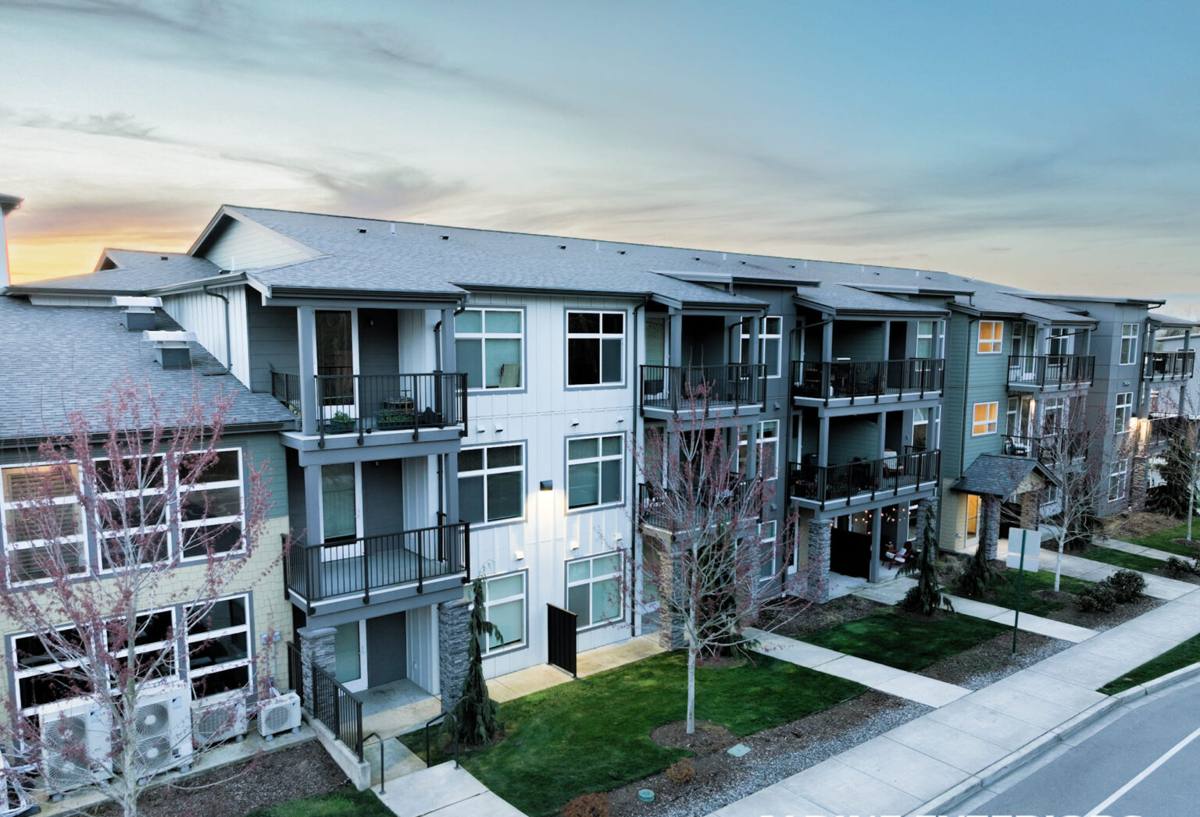
What Salt Air, Driving Rain, and Moss Actually Do to Siding
Salt Air
Airborne salt doesn't just sit on the surface — it's hygroscopic, meaning it pulls moisture out of the air and holds it against whatever it's landed on. On wood-based siding products, that means longer periods of elevated moisture at the surface, which is exactly the condition that lets rot and fungal growth get a foothold. On metal fasteners and trim, salt accelerates corrosion. Fiber cement itself is not organic material, so it doesn't feed rot, but the finish and the fasteners still need to be up to the job — which is one of the reasons we use factory-applied ColorPlus finishes and corrosion-resistant fastening rather than cutting corners there.
Driving Rain
Whatcom County storms coming off the Strait of Georgia often arrive sideways, not straight down. That matters for siding because a lot of water intrusion problems aren't from water sitting on a wall — they're from wind-driven rain finding its way behind the siding at laps, seams, and penetrations. A correct installation with proper flashing, house wrap integration, and lap spacing is what keeps that water out. The siding product matters, but the installation detailing matters just as much, arguably more, in a wind-driven-rain climate like this one.
Moss Season
Western Washington's long wet season, especially on shaded or north-facing walls near tree cover, gives moss and algae months to establish themselves. Moss holds moisture against a surface and, on materials that can absorb or swell with water, that's a slow path to deterioration. Fiber cement doesn't feed moss the way wood does, but any exterior surface here will get spores landing on it — the difference is whether the material and finish hold up to periodic cleaning without degrading.
Why We Only Install James Hardie in This Climate
We don't install LP SmartSide, vinyl, Cemplank, Allura, primed spruce, or cedar. That's a deliberate standard, not a lack of options. In a coastal, high-moisture climate like Birch Bay, the trade-offs of those products show up faster and more visibly than they would in a drier region:
- Wood-based composite and solid wood products (LP SmartSide, primed spruce, cedar) rely on their coatings and edge-sealing to keep moisture out. Any breach — a missed touch-up, a nail pop, a gap at a cut end — gives water a path into organic material that can swell, rot, or delaminate. In a place with this much annual rainfall and salt-laden air, that maintenance burden is real and ongoing.
- Vinyl siding is low-maintenance but it's a thin, flexible product that expands and contracts significantly with temperature swings and can crack or become brittle over time, especially with UV and salt exposure at the coast. It also doesn't offer the same fire performance as fiber cement.
- Cemplank and Allura are also fiber cement products, and fiber cement as a category is the right call for this climate. Where they differ from what we install is the specific engineering, factory finish process, and the manufacturer warranty structure behind the product. We standardized on James Hardie because of how those pieces come together — not because other fiber cement is a bad material category.
James Hardie is non-combustible, engineered specifically for climate zones (their HZ5 product line is built for the kind of freeze-thaw and moisture cycling the Pacific Northwest sees), and finished at the factory with ColorPlus technology rather than relying entirely on field-applied paint. That factory finish is baked on and cured under controlled conditions, which gives it better adhesion and color retention than a coat of paint applied on-site in variable weather — a real advantage on a job site where you can't always count on three dry, moderate days in a row.
What a Correct Fiber Cement Job Looks Like Here
The material is only half the equation. We've seen fiber cement installed poorly enough to fail early, and we've seen it installed correctly and still look right after decades. The difference is almost entirely in the details:
| Detail | Why It Matters in Birch Bay |
|---|---|
| Proper lap and clearance spacing | Keeps wind-driven rain from wicking upward into seams |
| Correct fastener type and placement | Corrosion-resistant fasteners matter more this close to salt air |
| Flashing at windows, doors, and penetrations | Primary defense against wind-driven rain finding a way behind the cladding |
| House wrap / weather-resistive barrier integration | Second line of defense if any water gets past the siding face |
| Ground clearance and bottom-edge detailing | Prevents wicking from splashback and standing moisture at grade |
| Factory-primed or ColorPlus cut-edge sealing | Exposed cut ends are the most common point of moisture entry if left unsealed |
Every one of those items is a place where a rushed installation can save an hour on the job and cost the homeowner years of siding life. We don't treat any of them as optional.
Our Process for a Birch Bay Fiber Cement Project
1. On-Site Assessment
We walk the exterior and look specifically at exposure — which walls face the water or prevailing wind, where moss and algae are already established, where past moisture damage shows up around trim, windows, or the foundation line. This tells us where extra attention to flashing and drainage detailing is needed versus where standard detailing is sufficient.
2. Tear-Off and Substrate Check
Old siding comes off and we check the sheathing and framing underneath for hidden rot or moisture damage before anything new goes up. Covering a compromised substrate with new siding just hides the problem — we address it first.
3. Weather Barrier and Flashing
We install or verify the house wrap and flashing system before siding goes up. In a wind-driven-rain climate, this layer is doing real work, not just checking a code box.
4. James Hardie Installation to Spec
Panels or lap siding installed per James Hardie's published installation guidelines — correct fastener schedule, clearances, and joint treatment — which is also what keeps the manufacturer warranty intact.
5. Trim, Caulking, and Final Detail
Trim boards, corners, and penetrations get sealed correctly the first time. This is where a lot of long-term moss and moisture problems either get prevented or get built in.
6. Walkthrough
We go over the finished job with the homeowner, including what routine maintenance (mainly periodic gentle cleaning to manage algae and moss buildup) looks like going forward.
What to Ask Before Hiring Anyone to Side a Birch Bay Home
- Do you have experience with coastal, salt-exposed installations specifically, not just siding in general?
- What fastener type do you use, and is it rated for coastal/corrosive exposure?
- How do you handle flashing at windows, doors, and other penetrations?
- Are cut edges sealed on-site, and with what product?
- Is your crew a certified or trained James Hardie installer, and does the manufacturer warranty stay intact with your installation method?
- Can you point to how you'd handle a wall that faces direct wind and spray versus a sheltered wall on the same house?
A contractor who can answer those specifically, rather than generically, is one who actually understands what this stretch of coastline does to an exterior.
Maintenance Realities for a Coastal Whatcom County Property
Even the right material benefits from basic upkeep in this environment. Fiber cement doesn't need the sealing, staining, or recoating that wood siding does, but a Birch Bay home still benefits from:
- Periodic gentle rinsing to remove salt residue and slow algae/moss buildup, especially on shaded or water-facing walls
- Keeping vegetation and tree cover trimmed back from siding to reduce prolonged dampness and moss establishment
- An annual walk-around to check caulking at trim and penetrations, since that's the most common place small gaps develop over time
- Prompt attention to any fastener staining or trim gaps before they become moisture entry points
None of this is heavy maintenance — it's the kind of occasional attention that keeps a correctly installed fiber cement exterior looking and performing the way it should for decades in this climate.
Why Local Experience Matters for This Job
Bellingham and Whatcom County cover a range of microclimates, and Birch Bay's direct coastal exposure is its own case within that range. A crew that mostly works inland Bellingham neighborhoods may not default to the extra flashing attention or fastener choices that a waterfront-adjacent Birch Bay home actually needs. We work this coastline regularly enough to know which walls need the extra half-hour of detailing and which don't, and we build that into every estimate rather than treating every job the same regardless of exposure.
If you're weighing a siding replacement or new install in Birch Bay, we're happy to walk the exterior with you, look at your specific exposure, and put together a straightforward, no-pressure estimate — just fill out the form below.