 Bellingham
 Building Decks for Birch Bay's Waterfront Conditions
Birch Bay sits right on the water, and that changes what a deck has to survive. A deck built the same way you'd build one twenty miles inland in Bellingham won't hold up the same way out here. Salt-laden air corrodes fasteners and hardware faster, driving rain off the bay finds every gap in flashing and framing, and the long, wet Whatcom County winters grow moss on anything that doesn't drain and dry properly. None of this means a deck in Birch Bay can't last for decades — it just means the materials, fasteners, and details have to be chosen for this specific environment, not a catalog spec sheet.
We work on decks throughout the Birch Bay area regularly, and most of the repair calls we get trace back to the same handful of issues: corroded fasteners nobody thought to upgrade, a ledger board that was never properly flashed against the house, or decking that traps moisture instead of shedding it. A correctly built deck avoids all three from day one.
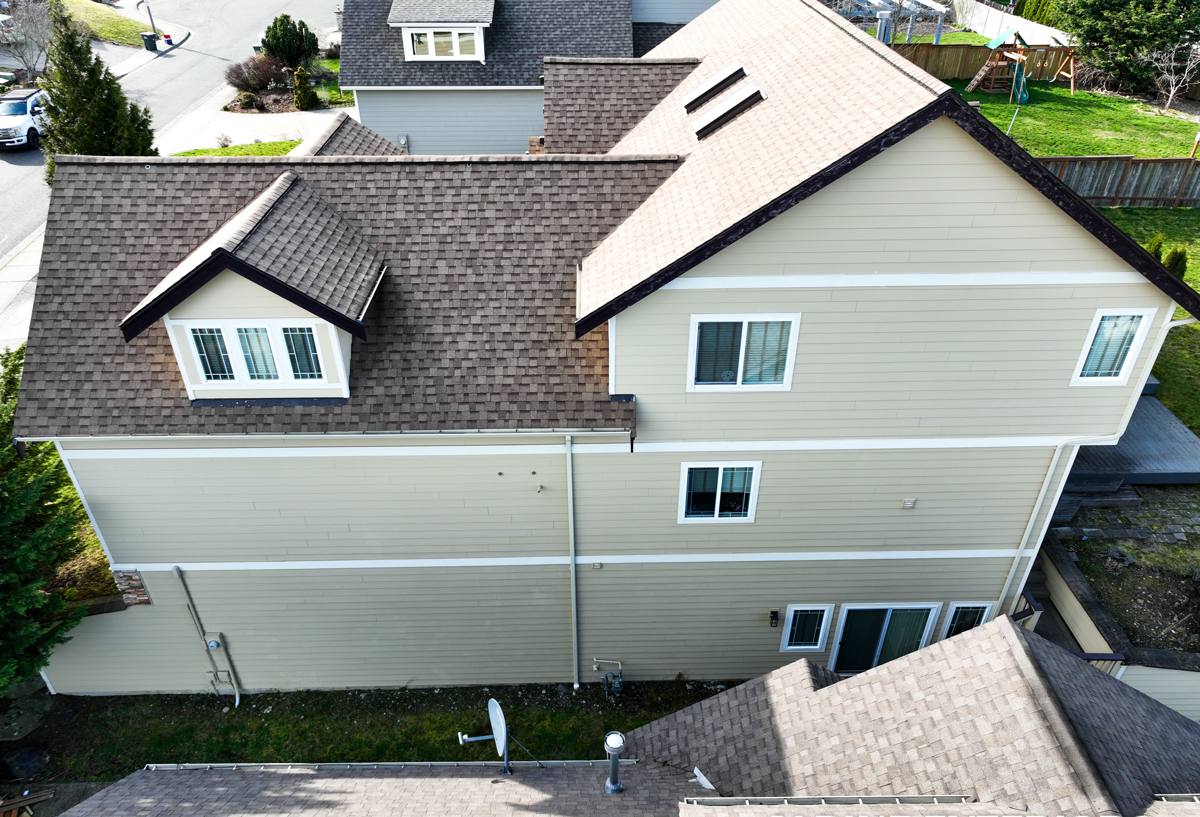
What Birch Bay's Climate Actually Does to a Deck
Salt Air and Corrosion
Being close to the bay means airborne salt settles on everything, including your deck's hardware. Standard galvanized fasteners and connectors can start corroding well before their inland counterparts would. Once a fastener corrodes, it doesn't just look bad — it loses holding strength, and that's a structural concern, not a cosmetic one. This is why we treat hardware selection differently for a Birch Bay build than we would for a deck a few miles inland.
Driving Rain and Wind-Driven Moisture
Storms off the water don't just fall straight down — wind pushes rain sideways, up under rail caps, and behind ledger boards. Flashing details that would be adequate in a calmer inland yard can fall short here. Every joint where the deck meets the house needs to be treated as a place water will actively try to get behind, not just drip past.
Moss and Extended Damp Season
Whatcom County's wet season runs long, and a deck that doesn't get much direct sun — common under mature trees or on the north side of a house — can stay damp for weeks at a stretch. That's exactly the environment moss and algae need. Beyond looking bad, a mossy deck surface gets slick and holds moisture against the boards, which shortens the life of both wood and composite decking if it's never cleaned off.
What a Correctly Built Deck Needs in This Environment
- Corrosion-resistant fasteners and hardware rated for coastal or high-moisture exposure, not generic exterior-grade hardware
- Proper ledger board flashing where the deck attaches to the house, including flashing tape and a drainage gap, not just caulk
- Adequate slope and gapping in the decking so water sheds off the surface instead of pooling
- Joist tape or flashing on top of framing members to keep water from wicking into the wood from above
- Ventilation underneath the deck so the framing can dry out between rain events instead of staying damp
- Railing and post connections built to handle the higher wind loads that come with open, waterfront exposure
Skip any one of these and the deck will probably still look fine for a year or two — the problems that show up from cutting corners here tend to surface three, five, or ten years down the road, usually as soft framing, rusted-through hardware, or a ledger board that's been quietly rotting behind the siding.
Choosing Decking Material for a Bay-Side Property
There's no single "best" decking material — it depends on your budget, how much upkeep you're willing to do, and how close you are to the water. Here's how the common options actually compare for a Birch Bay setting:
| Material | Upfront Cost | Maintenance | Salt/Moisture Behavior | Typical Lifespan |
|---|---|---|---|---|
| Pressure-treated wood | Lowest | Regular cleaning, periodic sealing/staining | Prone to swelling, splintering, and moss if not maintained | 10–15 years with upkeep |
| Cedar | Moderate | Sealing/staining every 1–2 years | Naturally rot-resistant but still needs sealed end grain and fasteners protected from moisture | 15–20 years with upkeep |
| Composite decking | Higher | Occasional washing; no staining or sealing | Doesn't absorb moisture or salt the way wood does, but still needs airflow underneath to prevent surface moss/algae | 20–25+ years, manufacturer-dependent |
| PVC decking | Highest | Lowest — washing only | Fully moisture-resistant surface; hardware and framing beneath still need proper protection | 25+ years |
Composite and PVC decking tend to make the most sense for exposed, waterfront lots because they take the guesswork out of ongoing maintenance — but they're not a substitute for correct framing and flashing underneath. We've seen composite decking installed over poorly flashed framing fail from the structure up, even though the boards themselves looked untouched. The decking material protects the surface; the framing and hardware protect the structure, and both matter.
Design Choices That Matter for Birch Bay Lots
Wind and Open Exposure
Many Birch Bay properties sit with little windbreak between the deck and the water. That affects railing design, post spacing, and how we anchor the structure — a deck built for a sheltered inland yard isn't necessarily sized right for a lot that takes wind straight off the bay.
Elevation and Drainage
Waterfront and near-waterfront lots often have grading and drainage considerations that inland lots don't — where the ground slopes, how runoff moves around the foundation, and whether the deck's footings need to sit above the expected water table. We assess this on-site rather than assuming a standard footing depth will work everywhere.
Sun Exposure and Board Orientation
Where a deck sits relative to the house and any tree cover affects how much direct sun it gets, which directly affects how fast moss and algae take hold. When it makes sense, we'll talk through orientation and layout options that give a shaded deck a fighting chance against moss, rather than fighting it every season with a pressure washer.
Our Process for a Birch Bay Deck Project
1. On-Site Assessment
We walk the property, look at sun and wind exposure, check the ground for drainage issues, and talk through how you actually plan to use the deck — entertaining, grilling, a quiet spot to watch the water — because that shapes size and layout as much as the lot does.
2. Design and Material Selection
We go over the material options honestly, including the trade-offs in the table above, and help you land on something that fits your budget and how much maintenance you actually want to do long-term.
3. Permitting
Deck projects in unincorporated Whatcom County or within Bellingham city limits may require a permit depending on size, height, and attachment to the home. We handle the permitting process as part of the project so you're not chasing paperwork.
4. Construction
Framing, flashing, and fastener choices follow the standards outlined earlier in this page — not shortcuts based on what's fastest to install. We flash the ledger board properly, use corrosion-resistant hardware throughout, and make sure the structure has room to breathe underneath.
5. Walkthrough
Before we consider the job done, we walk the finished deck with you, point out anything you should know about maintaining it, and answer whatever questions come up.
Keeping a Birch Bay Deck in Good Shape Year-Round
A well-built deck still needs some seasonal attention in this climate, especially with the moss and rain Whatcom County sees for much of the year. A simple annual routine goes a long way:
- Sweep off debris and standing leaves regularly, especially in fall — trapped organic matter holds moisture and feeds moss growth
- Wash the deck surface at least once a year to remove salt residue, pollen, and early moss growth before it takes hold
- Check railing posts and stair connections for any looseness, which can signal a fastener starting to corrode
- Keep gutters and downspouts near the deck clear so runoff isn't dumping extra water onto or under the structure
- Re-seal or re-stain wood decking on the manufacturer's recommended schedule — don't wait until it looks obviously weathered
- Check underneath the deck once a year for airflow — trapped vegetation or debris under low decks blocks the drying the structure depends on
Why It Matters to Hire a Crew That Already Works in Birch Bay
A contractor who mostly builds decks inland — where there's no salt air, less driving rain, and less wind exposure — may not default to the fastener grades, flashing details, or framing practices that a bay-side deck actually needs unless they stop and think it through project by project. A crew that regularly works Birch Bay and the surrounding coastal parts of Whatcom County builds those decisions into the process automatically, because we've already seen what happens when they're skipped. That's not a knock on general contractors — it's just the difference between occasional coastal work and doing it as a matter of course.
What Deck Projects Typically Run
Cost depends heavily on size, material, height off the ground, and site access, so we won't pretend to give you a number that means anything without seeing the property. In general terms, a pressure-treated or cedar deck sits at the lower end of the cost range, composite decking runs higher due to material cost, and PVC decking is typically the highest upfront investment. Site factors specific to Birch Bay — like difficult grading, limited equipment access on some waterfront lots, or additional footing depth — can also affect the final number. We'll walk the property and give you a real, itemized estimate rather than a rough guess over the phone.
If you're planning a new deck or need to know whether an existing one is holding up the way it should, we're glad to come take a look. Fill out the form below for a free, no-pressure estimate on your Birch Bay property.