 Bellingham
 Composite Decking for Birch Bay: Built for a Waterfront Climate
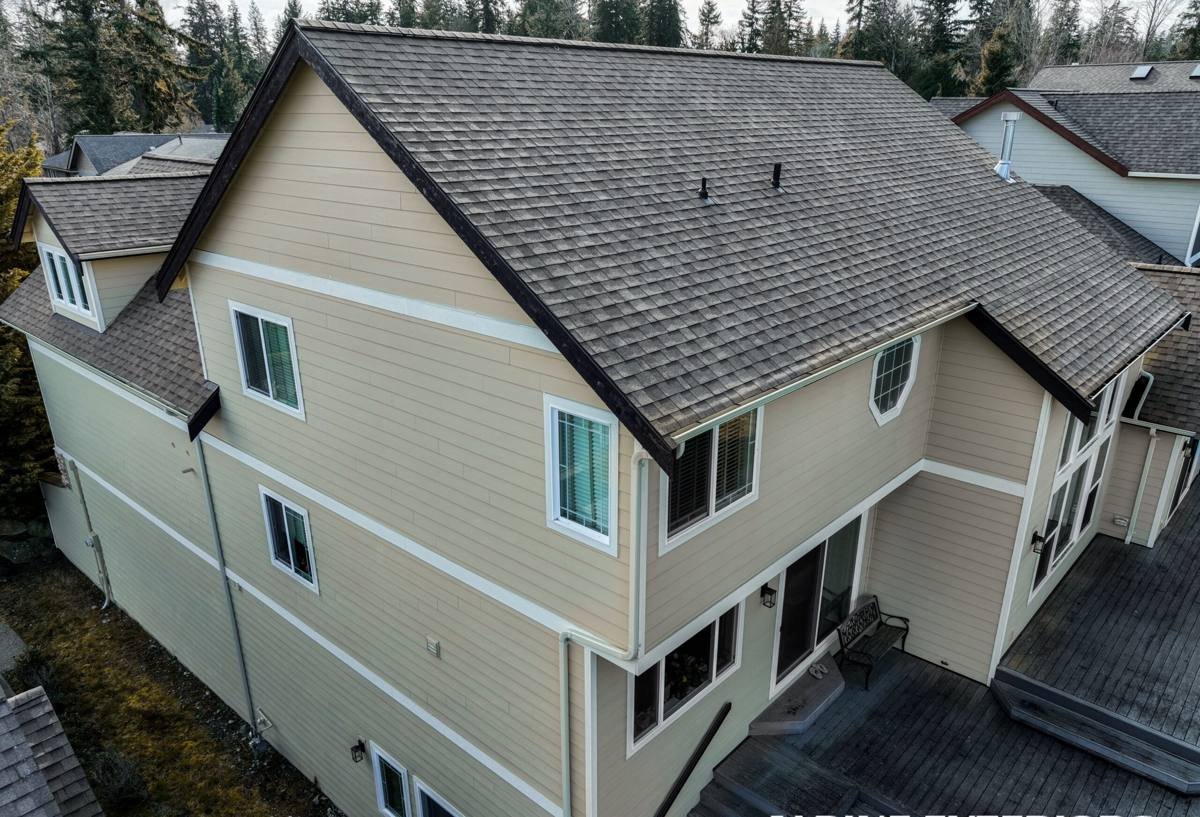
A deck in Birch Bay lives a harder life than a deck almost anywhere else in Whatcom County. It sits low, close to grade, exposed on multiple sides, and it takes the full brunt of whatever the bay sends inland — salt-laden air moving off the water, wind-driven rain that gets under railings and between boards, and a moss season that can run most of the year on shaded or north-facing sections. We install composite decking specifically for this environment, and we treat it as a system: framing, fasteners, drainage, and board material all working together, not just a set of boards laid across joists.
This page covers composite decking specifically for Birch Bay properties — what the local climate demands, what a correct installation actually involves, and how our process works from first walk-through to final punch list. If you're comparing composite against wood, or just trying to understand what "good installation" means before you hire anyone, this is the detail that matters.
What Salt Air, Driving Rain, and Moss Do to a Deck Here
Salt Air and Fastener Corrosion
Birch Bay's proximity to the water means decks here take on more airborne salt than decks even a few miles inland. Salt accelerates corrosion in any metal component — screws, hidden fastener clips, joist hangers, post bases — faster than a drier climate would. A deck can look fine on the surface for years while its fasteners and hardware quietly corrode underneath, which is one reason hardware choice matters as much as the decking material itself.
Driving Rain and Moisture Cycling
Rain off the bay doesn't just fall straight down; wind pushes it sideways and up under railings, fascia, and stair stringers. That means water reaches parts of a deck structure that a purely vertical rainfall model wouldn't account for — the underside of ledger boards, the tops of joists, the gaps between deck boards and rim joists. Framing lumber and any exposed wood components go through repeated wet-dry cycles across a Birch Bay winter, and that cycling is what eventually causes rot, cupping, and fastener pull-through in a poorly protected structure.
Moss, Algae, and Shaded Surfaces
Mild temperatures and near-constant moisture add up to a long moss and algae season across Whatcom County, and decks are especially exposed because they're horizontal surfaces that hold water and organic debris. Shaded decks, or sections under trees or close to the house on the north side, tend to stay damp longest and develop moss and surface algae well before sun-exposed sections do. That buildup isn't just cosmetic — it makes a deck surface slick and, on wood decking, it holds moisture against the board long enough to accelerate decay.
Why Composite Decking Fits This Climate
Composite decking doesn't absorb water the way solid wood does, so it doesn't swell, cup, or splinter through repeated wet-dry cycles the way an untreated or even pressure-treated wood deck can over years of Birch Bay winters. It also doesn't need the annual sanding, staining, or sealing that keeps a wood deck's surface protected from moisture and UV. That's a real advantage in a climate where a missed maintenance year on a wood deck can mean visible damage by the following spring.
That said, composite isn't maintenance-free, and it isn't automatically the right call for every homeowner or every deck. Capped composite boards resist moisture and staining better than uncapped composite, and board quality varies significantly between manufacturers and product lines. Part of an honest quote is walking through those tradeoffs with the homeowner rather than treating "composite" as a single interchangeable product.
| Factor | Composite Decking | Pressure-Treated Wood | Cedar |
|---|---|---|---|
| Moisture behavior | Doesn't absorb water into the board itself; capped products resist surface moisture well | Absorbs and releases moisture, prone to cupping and checking over time | Absorbs moisture readily, more prone to warping in sustained wet conditions |
| Maintenance in this climate | Periodic cleaning to remove moss and organic buildup; no staining or sealing | Needs regular sealing or staining to resist rot in a wet, salty climate | Needs regular refinishing to hold up to salt air and moisture |
| Typical longevity here | 25+ years with correct substructure and drainage | Shorter without consistent upkeep; substructure often fails before the boards do | Shorter without consistent refinishing in coastal exposure |
| Upfront cost | Higher material cost | Lower material cost | Moderate to higher material cost |
| Surface feel underfoot | Consistent; some products run warmer in direct sun | Natural wood feel, more prone to splintering as it ages | Natural wood feel |
What Correct Composite Decking Installation Involves
Composite boards are only as good as what's underneath them. Most of the deck failures we get called out to inspect in this climate aren't the composite decking itself failing — it's the substructure, the flashing, or the fastening that was done wrong, and the composite boards just sat on top of a problem until it showed up as bounce, staining, or a soft spot.
Framing and Substructure
Joists need to be sized and spaced correctly for the specific composite product going on top — composite boards generally require tighter joist spacing than solid wood decking, and manufacturer spec sheets vary by product. We frame to the actual manufacturer requirements for the board being installed, not a generic on-center spacing that happens to work for wood.
Joist Protection
Every joist top gets a protective barrier — typically a self-adhering joist tape — before decking goes down. That barrier keeps water from sitting directly on bare framing lumber where a deck board's fastener penetrates the joist, which is one of the most common places rot starts on any deck in a wet climate, composite decking included.
Ledger Flashing
Where a deck attaches to the house, the ledger board connection is one of the highest-risk points on the entire structure for water intrusion. Correct flashing integrates with the house's existing weather-resistive barrier or siding so water sheds outward and down, away from the rim joist and the house's wall assembly, rather than tracking behind the ledger and into the structure.
Fasteners and Hardware
Given the salt exposure in Birch Bay, we use corrosion-resistant fasteners and structural hardware rated for coastal exposure — hidden fastener clip systems where the product calls for them, and stainless or coated structural connectors at posts, beams, and joist hangers. Standard hardware that's fine inland can corrode noticeably faster this close to the water.
Drainage and Airflow Underneath
A deck that traps moisture underneath it, with no airflow and poor grading beneath the frame, stays wetter longer after every rain event. We grade and detail the space under the deck so water moves away from the structure instead of pooling under it, which matters more in a climate that gets sustained wet stretches rather than isolated storms.
Board Spacing and Fastening Pattern
Composite boards need consistent gapping for drainage and for the thermal expansion and contraction the material goes through across seasonal temperature swings. Fastening pattern and gap width follow the manufacturer's spec, not a generalized rule of thumb, because getting this wrong shows up later as boards that buckle, pull at fasteners, or develop uneven gaps.
Choosing the Right Composite Board for a Birch Bay Deck
Not all composite decking is built the same way, and the differences matter more in a marine climate than they would somewhere drier.
- Capped composite: Has a plastic cap layer wrapped around the wood-plastic core, giving better resistance to moisture penetration, staining, and fading than uncapped boards — generally the better fit for a climate with this much sustained moisture exposure.
- Uncapped composite: Costs less but has a more exposed wood-plastic core that can absorb some moisture and is more prone to surface mold and staining over time, especially on shaded sections of a deck.
- Color and heat considerations: Darker composite boards run warmer underfoot in direct sun and can show fading differently than lighter colors over years of UV exposure; this matters less on shaded Birch Bay decks but is worth factoring in on open, sun-exposed sites.
- Grain and texture: Textured, wood-grain finishes tend to hide surface debris and light moss growth better than smooth finishes, which can be a real factor on decks that sit in shade for much of the year.
- Manufacturer warranty structure: Warranty length and what's actually covered — staining, fading, structural integrity — varies by manufacturer and product tier, and it's worth reading the specifics rather than assuming all composite warranties are equivalent.
Maintenance: What Composite Decking Still Needs in This Climate
Composite decking cuts down on maintenance significantly compared to wood, but "low maintenance" isn't "no maintenance," especially with the moss and organic buildup common across Whatcom County.
- Sweep or rinse the deck surface regularly to clear leaves, needles, and organic debris before they trap moisture against the boards
- Wash the deck with a soft-bristle brush and a mild cleaner periodically to remove early moss, algae, or mildew growth, particularly on shaded sections
- Avoid pressure washing directly into board seams or fastener points, which can drive water where it doesn't belong
- Check railing posts, stair connections, and any visible hardware periodically for early signs of corrosion
- Keep gutters and downspouts near the deck clear so roof runoff isn't dumping extra water onto or under the deck structure
- Trim back overhanging vegetation where practical to reduce the shade and debris load that feeds moss growth
Our Process for a Birch Bay Composite Deck
We start with an on-site assessment of the existing structure if there's a deck to replace, or the site conditions if it's new construction — looking specifically at drainage, sun and shade exposure, and how water moves around and under the area during a heavy rain. From there we put together a clear, written scope covering the specific composite product, framing spec, flashing details, and hardware being used, along with a realistic timeline, before any work begins.
During the build, framing, joist protection, ledger flashing, and fastener choices are handled to the standard this climate requires as a matter of course, not as an upsell option. We walk the finished deck with the homeowner before calling the job done, and we're upfront about the maintenance the specific product chosen will actually need going forward.
A Simple Checklist Before Hiring for Deck Work in Birch Bay
- Ask what composite product they install and why, and get the manufacturer's specific framing and fastening requirements in writing
- Confirm current Washington contractor licensing and active liability insurance
- Ask specifically how they detail ledger flashing and joist protection for a wet, salt-exposed climate
- Ask about the fastener and hardware grade used, particularly for posts, hangers, and hidden clip systems
- Get a clear, written scope of work and product specification before signing anything
Why a Local Crew Matters for This Job
A crew that already works Birch Bay regularly has already seen how salt air, wind-driven rain, and a long moss season affect deck structures here specifically — which framing details hold up, which fastener grades corrode too fast, and which shaded spots need extra attention to drainage and airflow. That familiarity shows up in the parts of the job a homeowner doesn't see once the boards are down: the joist tape, the ledger flashing, the hardware grade. Those are exactly the details that decide whether a deck performs well for twenty-five years or starts showing problems in five.
If you're weighing composite decking for a home in Birch Bay, we're happy to walk the site with you and give an honest read on what the space and the climate call for. Reach out below for a free, no-pressure estimate.