 Bellingham
 Building Decks for Barkley's Climate
Barkley sits close enough to Bellingham Bay and the Sound to catch salt-laden air on top of the Pacific Northwest's usual rain load, and that combination is harder on outdoor structures than most homeowners expect. A deck here isn't just furniture for the yard — it's a structure that spends eight or nine months a year damp, shaded part of the day by mature trees common to the area, and exposed to wind-driven rain that finds its way into joints and fastener holes other regions never have to worry about. Add a moss season that can run from October through May, and you have a set of conditions that punishes decks built to a generic, one-size-fits-all spec.
We build decks in Barkley the way the local conditions require: correct drainage under the structure, fasteners and hardware rated for wet coastal exposure, and decking material chosen with moss and mildew resistance in mind, not just looks on the day of installation. This page covers what that actually means in practice, not marketing language — what a correct build involves, how our process works, and why a crew with local experience matters more here than in a drier climate.
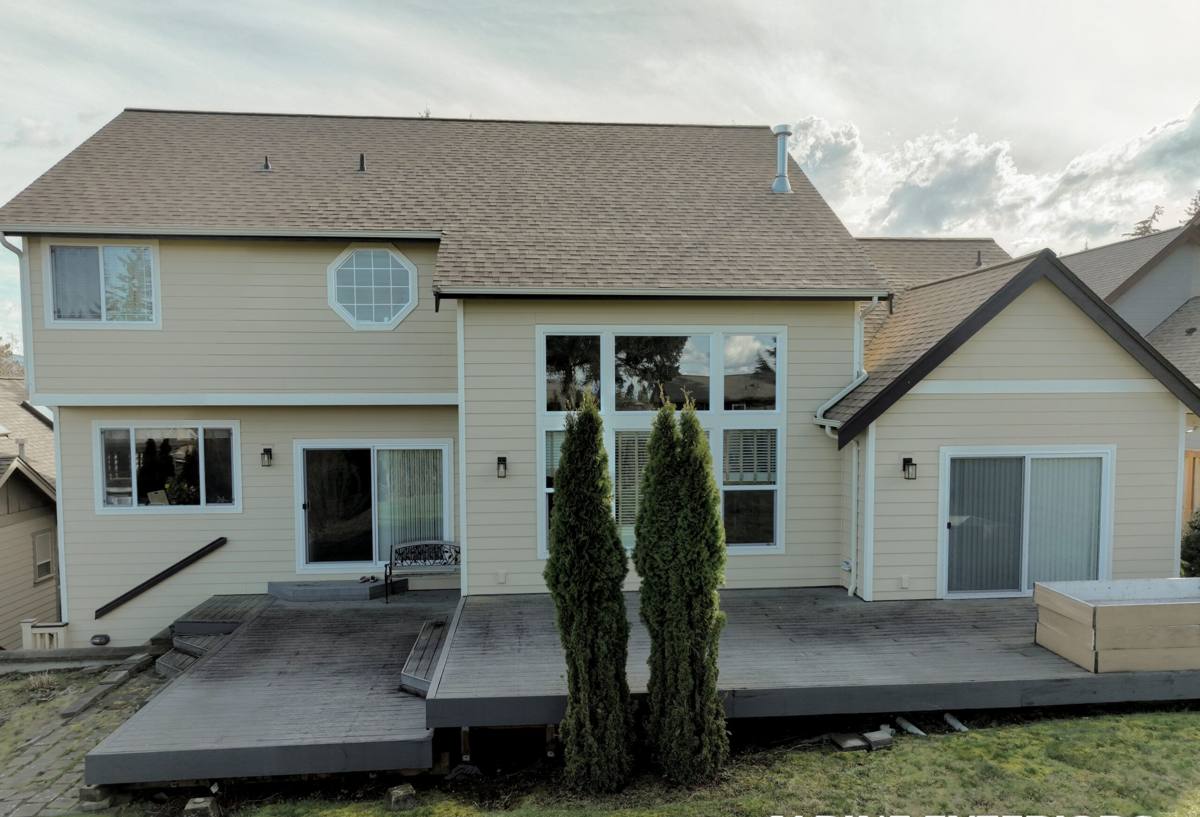
What Local Homes Need From a Deck
Moisture Management First
The single biggest driver of deck failure in Whatcom County isn't the decking surface — it's what happens underneath and inside the structural framing. Water that gets trapped against ledger boards, joists, or post bases and can't dry out between rain events is what causes rot, not the rain itself. A deck built without attention to airflow and drainage will show problems within a few wet seasons, even if the surface boards look fine.
Salt Air and Metal Hardware
Proximity to the bay means hardware corrodes faster than it would inland. Standard galvanized fasteners can start showing rust streaks and weakening well before their expected service life in a coastal-influenced microclimate like Barkley's. That's a material selection issue, not a construction issue — and it's one that's cheap to solve correctly at build time and expensive to fix after the fact.
Moss, Algae, and Surface Traction
A shaded deck in this area will grow moss and algae if the surface stays damp and doesn't get airflow or occasional sun exposure. Beyond looking bad, a mossy deck surface is a slip hazard, especially on stairs. Board spacing, surface texture, and orientation relative to sun and shade all factor into how much moss maintenance a deck will need over its life.
What a Correct Deck Build Involves
A deck is a structural project before it's a finish project. Getting the visible parts right matters, but it only holds up long-term if the parts nobody sees are done correctly first.
- Ledger attachment and flashing: Where the deck ties into the house, proper flashing keeps water from working its way behind siding and into the wall structure — this is one of the most common failure points on older decks we're asked to repair or rebuild.
- Footings sized for our soil and frost conditions: Footings need to be sized and set to local code, not guessed at, especially in areas with clay-heavy or variable soil.
- Joist spacing matched to the decking product: Composite and PVC decking often require tighter joist spacing than wood — using a wood-spec framing plan under composite boards leads to bounce and premature wear.
- Coastal-rated fasteners and connectors: Stainless steel or high-grade coated hardware where corrosion resistance matters, particularly at ledger connections and stair stringers.
- Ventilation under the deck: Adequate clearance and airflow beneath low decks so the framing can dry out between storms instead of sitting wet.
- Proper board gapping: Spacing that accounts for wood expansion and contraction and lets water drain through rather than pool on the surface.
Our Deck Building Process
1. On-Site Assessment
We walk the property, look at drainage patterns, sun and shade exposure, existing structure (if this is a rebuild), and how the deck will connect to the house. This is also where we talk through how the space will actually be used — that affects size, layout, and railing choices.
2. Design and Material Selection
We go over decking material options honestly, including the maintenance trade-offs of each, and design the layout and framing plan to match. Any structural elements like stairs, multi-level decks, or built-in seating get planned at this stage, not improvised mid-build.
3. Permitting
Most new decks and many rebuilds in and around Bellingham require a building permit, particularly for structures above a certain height or attached to the house. We handle the permit process as part of the project so you're not left navigating city or county requirements on your own.
4. Demolition (Rebuilds Only)
For deck replacements, we remove the old structure and inspect the ledger connection and any framing that was hidden — this is often where we find the moisture damage that prompted the rebuild in the first place.
5. Framing and Structural Work
Footings, posts, beams, and joists go in to code, with flashing and hardware specified for our climate. This stage is inspected before decking goes down.
6. Decking, Railing, and Finish Work
Surface boards, railings, stairs, and any trim or skirting are installed last. We walk the finished deck with you before calling the job complete.
Choosing a Decking Material for Barkley
There's no single right answer here — it depends on your budget, how much upkeep you want to take on, and how much shade the deck gets. Here's how the common options compare for this climate specifically:
| Material | Moisture/Moss Behavior | Maintenance | Typical Lifespan Here |
|---|---|---|---|
| Pressure-treated wood | Absorbs moisture; needs sealing to resist mildew and moss buildup | Annual cleaning and re-sealing recommended | 15-20 years with upkeep |
| Cedar | Naturally rot-resistant but still needs sealing in shaded, damp spots | Periodic cleaning and finish maintenance | 15-25 years with upkeep |
| Composite decking | Doesn't absorb water like wood, but can still develop surface algae/moss film if shaded and unwashed | Occasional washing; no sealing or staining | 25-30+ years |
| PVC decking | Fully moisture-resistant surface; least prone to moss staining | Lowest maintenance of the group | 25-30+ years |
We don't push any one product as universally "best" — a shaded Barkley lot under tall trees is a different situation than an open, sunny lot, and the honest answer changes with it. What we won't do is install a product in a way that fights its own moisture behavior, like tight-gapping composite boards or skipping sealant on wood in a shaded, damp location — that's a setup for problems regardless of what the material is rated to do.
Permits and Local Requirements
Depending on the deck's height, size, and whether it's attached to the house, a permit through the City of Bellingham or Whatcom County (depending on exactly where the property sits) is typically required. Permitted work also means inspections at the framing stage, which is a good thing — it's a second set of eyes confirming footings, ledger attachment, and structural connections are correct before the deck gets closed in. We manage this process as part of the job rather than leaving it for the homeowner to sort out.
Common Problems We Find on Older Barkley Decks
- Rot at the ledger board where flashing was missing or improperly installed
- Rusted or failing fasteners at stair stringers and railing posts
- Soft or spongy spots in wood decking from trapped moisture underneath
- Moss buildup on shaded sections creating a slip hazard, especially on stairs
- Undersized or settled footings causing a deck to feel unstable or uneven
- Composite decking installed with wood-spec joist spacing, leading to bounce
If you're dealing with any of these on an existing deck, it's worth having it looked at before deciding between a repair and a full rebuild — sometimes the framing is sound and only the surface needs attention, and sometimes what looks like a surface problem is actually structural.
Keeping a Deck in Good Shape Year-Round
Whatever material you choose, a few habits go a long way in this climate:
- Sweep leaves and debris off the surface regularly in fall — trapped organic matter holds moisture and feeds moss growth
- Rinse or lightly scrub the surface once or twice a year to knock back algae and moss before it takes hold
- Check under the deck periodically for standing water or blocked drainage paths
- Reseal wood decking on the schedule recommended for the product, more often in shaded areas
- Inspect railing posts and stair connections annually for movement or corrosion at the hardware
- Trim back overhanging branches to let more light and air reach the deck surface
Why a Crew That Already Works Barkley Matters
Deck-building fundamentals are the same everywhere, but the details that determine whether a deck lasts 15 years or 30 in this specific area — flashing details, hardware grade, board spacing for our moisture cycle, footing depth for local soil — are learned by building here repeatedly, not from a generic spec sheet. A crew that regularly works Barkley and the surrounding Bellingham neighborhoods has already seen how decks in this exact microclimate age, which shortcuts fail first, and which material and hardware choices actually hold up through a Whatcom County winter. That local track record is worth more than a lower bid from a crew unfamiliar with how this climate treats outdoor structures.
If you're planning a new deck or dealing with an aging one in Barkley, we're happy to take a look and give you a straight assessment — no pressure, no upsell, just what your project actually needs. Use the form below to request a free estimate.