 Bellingham
 Why Puget Roofs Wear Differently Than Roofs Inland
If you own a home in the Puget area, you already know your roof works harder than a roof twenty miles inland. Proximity to the water means salt-laden air settles on every exposed surface, including shingle granules and exposed metal fasteners. Add Whatcom County's long wet season, driving rain that comes in sideways off Bellingham Bay during winter storms, and shaded, north-facing slopes that stay damp for weeks at a stretch, and you have a roofing environment that punishes shortcuts. A shingle roof that would last three decades in a dry climate can lose years of service life here if it's installed without the right underlayment, ventilation, and flashing details.
None of this means asphalt shingles are a poor choice for Puget homes — they remain one of the most practical, cost-effective roofing systems available, and the majority of homes in this part of Whatcom County are shingled for good reason. It means the installation has to account for local conditions instead of following a generic spec sheet.
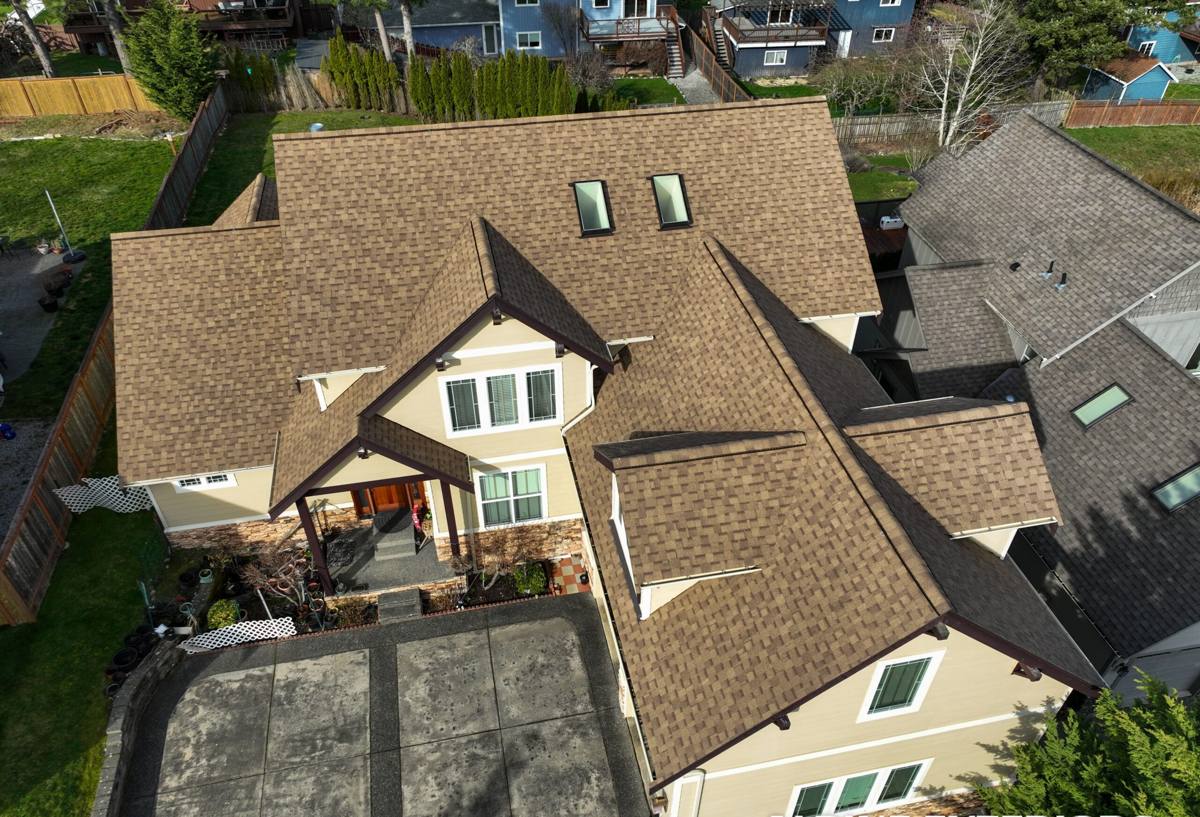
What Salt Air, Rain, and Moss Actually Do to a Roof
Salt Air and Metal Fatigue
Salt accelerates corrosion on exposed nail heads, flashing, and vent stacks. When a roofer uses standard fasteners instead of corrosion-resistant hardware, or leaves flashing seams under-sealed, salt air finds those weak points years before it would cause problems on a roof further from the water.
Driving Rain and Wind-Driven Water
Bellingham's storms don't just drop rain straight down — wind pushes it sideways and up under shingle tabs, especially on exposed gables and roof edges facing the water. This is why proper shingle overlap, sealant strip activation, and starter course installation matter more here than in calmer inland climates. A roof that looks fine from the ground can still be taking on water at the edges if these details were rushed.
Moss Season
Whatcom County's moss season runs long — anywhere shade, moisture, and organic debris collect, moss and algae take hold. Moss isn't just cosmetic. As it grows, it lifts shingle tabs, holds moisture against the roof deck, and works its way under the shingle edge, which is one of the more common causes of premature leaks on older roofs in this area. North-facing slopes, roofs under tree cover, and homes close to the water tend to see the worst of it.
What a Correctly Installed Shingle Roof Includes
A shingle roof is a system, not a single layer. Each component below plays a specific role, and skipping or underspecifying any one of them is where most premature roof failures in this climate start.
- Ice and water shield at eaves, valleys, and around penetrations — critical protection against wind-driven rain and ice damming on shaded slopes.
- Synthetic underlayment across the full deck, which sheds moisture better and holds up longer than older felt products in a consistently wet climate.
- Balanced attic ventilation (intake at the eaves, exhaust at the ridge) to keep the underside of the deck dry and prevent condensation-driven rot.
- Corrosion-resistant flashing and fasteners at every roof-to-wall transition, chimney, skylight, and vent — the detail salt air punishes first if it's cut corners.
- Proper nailing pattern per manufacturer spec, not just "close enough," since under- or over-driven nails are a leading cause of shingle blow-off in coastal wind.
- Starter strip and drip edge correctly installed at all eaves and rakes to prevent wind uplift and water intrusion at the roof's most vulnerable edges.
Choosing the Right Shingle for a Puget Home
Not every asphalt shingle performs the same in this climate. The table below compares the common options homeowners in the area ask about.
| Shingle Type | Typical Lifespan | Moss/Algae Resistance | Wind Rating | Best Fit |
|---|---|---|---|---|
| 3-Tab (economy) | 15–20 years | Low unless treated | Lower | Budget-conscious rentals or outbuildings |
| Architectural / Dimensional | 25–30 years | Moderate to good with algae-resistant granules | Higher, better wind uplift resistance | Most Puget-area homes; best balance of cost and durability |
| Impact-Resistant Architectural | 30+ years | Good | High | Homes with tree cover or debris exposure |
We generally steer homeowners in this area toward architectural shingles with algae-resistant granules as the practical default. The upfront cost difference over 3-tab shingles is modest, and the added mass and better sealant performance matter more here, given how much wind-driven rain and moss pressure the roof deals with over its lifespan.
Our Process, Start to Finish
1. Roof Assessment
We inspect the existing roof, deck condition, ventilation, and flashing details, and check for the moss and moisture damage patterns common on Puget-area homes — especially on shaded or water-facing slopes. You get a straight answer on what's actually needed, not an upsell.
2. Tear-Off and Deck Inspection
We remove the old roofing down to the deck rather than layering over it. This lets us catch soft or rotted decking — a common find on older homes where moss has been holding moisture against the sheathing for years — and replace only what's actually compromised.
3. Underlayment and Flashing
Ice and water shield goes down first at vulnerable areas, followed by synthetic underlayment across the full deck. All flashing is replaced or upgraded rather than reused, since reused flashing is one of the more common sources of callback leaks.
4. Shingle Installation
Shingles are installed to manufacturer nailing specs with correct exposure and overlap for wind performance. We pay particular attention to eaves, rakes, and valleys — the areas that take the brunt of wind-driven rain off the water.
5. Ventilation Check
We confirm intake and exhaust airflow is balanced before calling the job finished. Poor ventilation is invisible from the ground but shortens shingle life and invites moisture problems in the attic.
6. Cleanup and Walkthrough
Job site and gutters are cleared of debris and fasteners, and we walk the finished roof with you so you know exactly what was done and what to watch for going forward.
Cost Factors for Puget-Area Roofs
Every roof is different, but the factors that most commonly move the price on a job in this area are:
| Factor | Why It Matters Here |
|---|---|
| Roof pitch and access | Steeper or harder-to-access roofs take longer and require more safety setup |
| Deck condition | Moss-related moisture damage found during tear-off can require plywood replacement |
| Number of penetrations | Each vent, skylight, and chimney needs its own properly flashed detail |
| Shingle grade selected | Architectural and impact-resistant lines cost more per square than 3-tab |
| Ventilation upgrades | Adding ridge or soffit venting where none exists adds labor but pays off in shingle lifespan |
We give a written estimate that breaks these out so you know exactly what you're paying for, rather than a single lump number.
Maintaining a Shingle Roof Through Moss Season
A well-installed roof still benefits from basic upkeep, especially given how long moss season runs in Whatcom County. A few habits go a long way:
- Keep gutters clear so water isn't backing up under the shingle edge during heavy rain.
- Trim overhanging branches to reduce shade and debris buildup on north-facing slopes.
- Have moss physically removed rather than power-washed off, which can strip granules and shorten shingle life.
- Watch for granules collecting in gutters or downspouts — a sign the shingle surface is wearing.
- Schedule a roof check after major windstorms, since lifted or missing shingles are easiest to fix before the next rain gets under them.
Why a Crew That Knows Puget Matters
Roofing crews that mostly work drier, inland climates don't always default to the details that matter here — the corrosion-resistant fasteners, the extra ice and water shield at exposed edges, the ventilation balance that keeps moss and moisture from undermining a roof from underneath. A crew that regularly works homes in and around Bellingham and Whatcom County knows which slopes on a Puget-area home tend to hold moss, which roof edges take the worst of the wind off the water, and builds the roof accordingly from day one instead of learning it the hard way through callbacks.
Signs Your Puget Home May Need a New Roof
Not every roofing issue means a full replacement, but these are worth having looked at:
- Shingles that are curling, cracking, or missing granules in patches
- Persistent moss growth that returns quickly after cleaning
- Daylight visible through the attic roof deck
- Soft spots or sagging when walked (by a professional, not a DIY climb)
- Staining on interior ceilings, especially after wind-driven storms
- A roof approaching or past 20–25 years old, particularly if it's never been reflashed
If your roof shows one or two of these signs, a targeted repair may be all that's needed — we'll tell you honestly if that's the case rather than pushing a full tear-off you don't need.
If your roof is showing wear from Bellingham's salt air, rain, or moss season, we're happy to take a look and give you a straightforward, no-pressure estimate on what it would take to get it right. Use the form below to get started.