 Bellingham
 Roofing Built for South Hill's Weather, Not Just Any Weather
South Hill sits up on the slope overlooking Bellingham Bay, which means homes here catch wind and moisture that flatter neighborhoods don't deal with as directly. Salt-tinged air off the bay, driving rain that comes in sideways during winter storms, and a moss season that can run eight or nine months out of the year all put extra demands on a roof system. A roof installed without those specifics in mind might look fine for a year or two, then start showing problems that a properly specified install would have avoided from day one.
When we install a new roof in South Hill, we're not just swapping old shingles for new ones. We're building a system — decking, underlayment, flashing, ventilation, and the roofing material itself — that's matched to this particular hillside microclimate in this corner of Whatcom County.
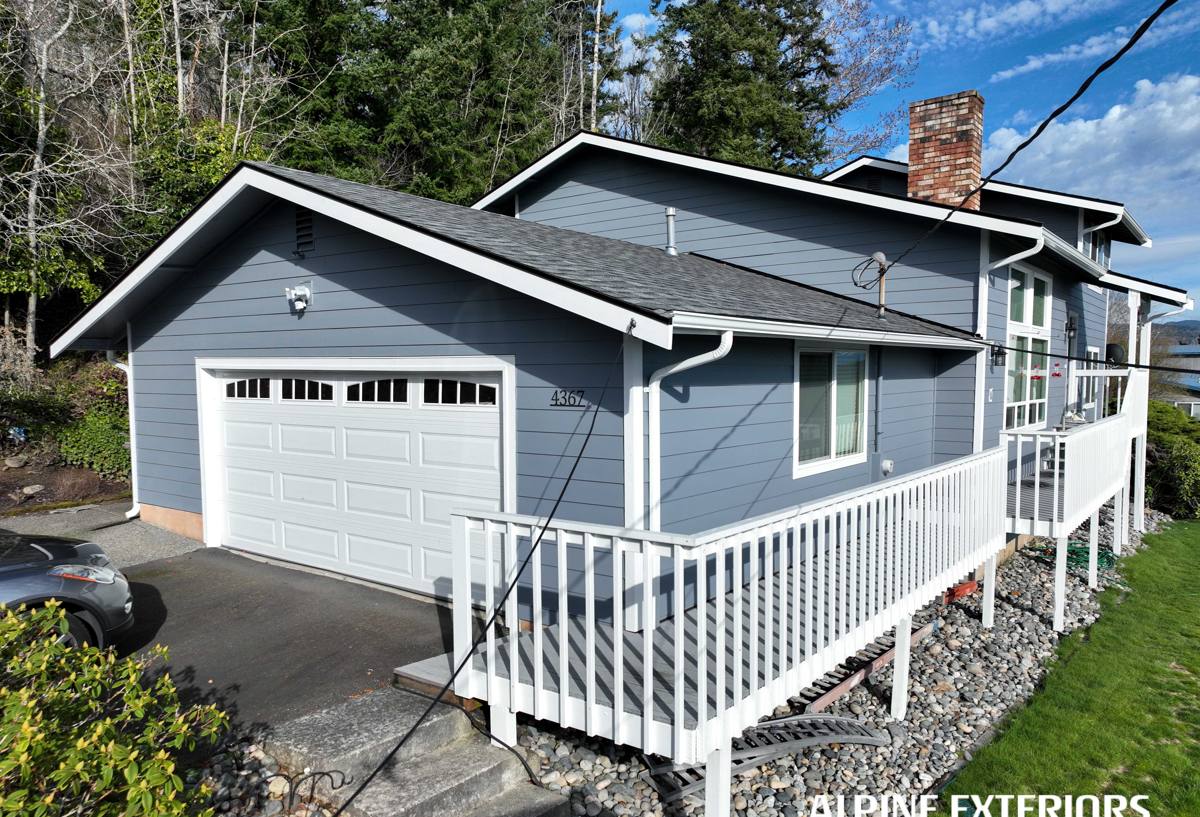
What Whatcom County Weather Actually Does to a Roof
Salt Air and Metal Fatigue
Homes closer to the water deal with airborne salt that accelerates corrosion on exposed metal — nails, flashing, gutters, and vent stacks. Standard fasteners and cheap flashing metal can start rusting years before they should. We spec corrosion-resistant fasteners and flashing on South Hill jobs as a matter of course, not as an upgrade.
Driving Rain and Wind-Driven Water
Bellingham's rain doesn't always fall straight down. Wind off the bay pushes it sideways and up under laps, ridges, and around penetrations like vent pipes and chimneys. A roof that would perform fine somewhere calmer can leak here if the underlayment, ice-and-water membrane placement, and flashing details aren't built for wind-driven moisture specifically.
Moss Season
Shade, moisture, and mild temperatures make Western Washington close to ideal for moss growth, and South Hill's tree cover only adds to it. Moss holds moisture against the roof surface, works into shingle laps, and lifts edges over time. It also adds weight and can clog gutters and valleys, which backs water up under the roofing material. A new roof install is the right time to address the conditions that let moss take hold in the first place — not just delay the problem.
What a Correct Roof Installation Actually Involves
A lot of roof jobs look similar from the ground once they're finished. What separates a roof that lasts from one that doesn't is almost entirely in the layers you can't see once the crew leaves. For a South Hill home, that means:
- Deck inspection and repair — checking the plywood or OSB sheathing for soft spots, rot, or delamination before anything new goes down, and replacing any compromised sections
- Ice-and-water shield at eaves, valleys, and around all penetrations, since these are the spots wind-driven rain and moss-related backups cause the most damage
- Synthetic underlayment across the full deck as a second line of defense, tougher and more consistent than older felt products in wet climates
- Balanced ventilation — intake at the eaves and exhaust at the ridge, sized correctly for the attic volume, so moisture doesn't get trapped and condense inside the roof assembly
- Corrosion-resistant flashing and fasteners at every valley, wall intersection, chimney, and vent, given the salt air exposure common on this side of Bellingham
- Proper nailing pattern and exposure for the specific roofing material, which affects wind rating and warranty validity as much as the material itself
Skip any one of these and the roof can still look correct for a while. The failures just show up later, usually as leaks, soft decking, or premature granule loss, and by then the fix costs more than doing it right the first time.
Roofing Materials: How They Perform in This Climate
There's no single "best" roofing material — the right choice depends on the home, the budget, and how much moss and moisture exposure the specific lot gets. Here's how the common options actually compare for a South Hill install:
| Material | Moss/Moisture Resistance | Typical Lifespan | Maintenance Needs |
|---|---|---|---|
| Architectural asphalt shingle | Good, with proper ventilation and periodic cleaning | 25-30 years | Moderate — occasional moss/debris removal |
| Standing seam metal | Excellent — sheds moss and debris, minimal organic buildup | 40-50+ years | Low |
| Composite/synthetic shake | Good — engineered to resist moisture absorption | 30-50 years | Low to moderate |
| Cedar shake | Requires diligent maintenance in this climate | 20-30 years with upkeep | High — regular treatment and cleaning |
We're not going to tell a homeowner one of these products is bad — each has a legitimate place. What we will do is talk through the honest trade-offs. Cedar shake, for instance, can look great, but in a climate this wet it needs real maintenance discipline to avoid moss and moisture problems, and we'll say so upfront rather than let a homeowner find out the hard way. Our job is matching the material to what the homeowner actually wants to maintain over the next few decades.
Our Installation Process
1. On-Site Assessment
We start with a walk of the existing roof (or a review of the plans, for new construction) to check deck condition, ventilation setup, flashing points, and any moss or moisture staining that tells us where water has been getting in.
2. Material Selection and Scope
Based on that assessment and the homeowner's priorities — budget, appearance, longevity, low-maintenance versus traditional look — we put together a scope that specifies material, underlayment, ventilation changes, and any deck repair.
3. Tear-Off and Deck Prep
Old roofing comes off down to the deck so we can actually see what's there. Any soft, rotted, or delaminated sheathing gets replaced before anything new goes down. This step gets skipped by crews trying to move fast, and it's the single most important part of the job for long-term performance.
4. Underlayment and Flashing
Ice-and-water membrane goes in at the vulnerable spots, synthetic underlayment across the field, and new flashing at every valley, wall, and penetration. This is where the wind-driven rain protection actually happens.
5. Roofing Installation
The roofing material goes down to manufacturer specification for nailing pattern, exposure, and fastener type — details that matter for both wind resistance and warranty coverage.
6. Ventilation Check and Final Details
We confirm intake and exhaust ventilation is balanced for the attic, install ridge and soffit vents as needed, and finish flashing at chimneys, skylights, and vent stacks.
7. Cleanup and Walkthrough
Full site cleanup, including a magnetic sweep for stray nails, followed by a walkthrough so the homeowner knows what was done and what to expect going forward.
What Drives the Cost of a New Roof
Every roof is priced individually based on the actual conditions of the home, but the factors that move the number are consistent. Understanding them ahead of time makes for a much more useful conversation during the estimate.
| Factor | Why It Matters |
|---|---|
| Roof size and pitch | Steeper roofs take longer to work safely and use more material per square foot of coverage |
| Deck condition | Rotted or soft sheathing found during tear-off adds material and labor to replace |
| Number of penetrations | Each chimney, skylight, and vent stack needs its own flashing detail |
| Material choice | Asphalt, metal, and composite products carry different material and labor costs |
| Ventilation upgrades | Adding or correcting intake/exhaust venting affects both cost and long-term performance |
| Access and site conditions | Steep lots, mature trees, and limited staging space all affect labor time |
We'd rather walk a homeowner through these factors honestly during the estimate than quote a number with no explanation behind it.
Signs a South Hill Roof May Be Due for Replacement
- Granules collecting in gutters or at downspout outlets
- Curling, cupping, or cracked shingles, especially on south- or west-facing slopes
- Persistent moss growth that returns quickly after cleaning
- Daylight visible through the attic roof deck
- Soft or spongy spots when walking the roof (checked by a professional, not a homeowner on a ladder)
- Staining on interior ceilings or in the attic near penetrations
- A roof approaching or past the manufacturer's expected service life
Why Local Experience on This Hill Matters
South Hill's mix of elevation, tree cover, and proximity to the bay creates conditions that differ block to block. A crew that already works this neighborhood knows which slopes hold moss longest, which lots take the worst of the wind-driven rain, and which older homes in this part of Bellingham tend to have ventilation setups that need correcting during a reroof. That local pattern recognition doesn't replace a proper inspection, but it means fewer surprises and a scope that's right the first time.
We also stand behind the work with straightforward warranty terms on both materials and labor, explained clearly before any work starts — no fine print surprises after the fact.
Get a Free, No-Pressure Estimate
If a roof on South Hill is showing its age or you're planning ahead, we're happy to come take a look and give an honest assessment — no obligation, no pressure. Fill out the form below to schedule a free estimate.