 Bellingham
 Building New in Columbia: What Your Windows Need to Handle
If you're framing a new home or an addition in the Columbia neighborhood, the windows you choose and how they get installed will matter more than almost any other exterior decision you make. Columbia sits close enough to the water that salt-laden air is a real factor in material selection, and like the rest of Bellingham and Whatcom County, it sees long stretches of driving rain and a moss season that can run most of the year. New construction gives you one real advantage over a remodel: you get to build the water management system into the wall from scratch, instead of working around what's already there. That's an opportunity worth taking seriously, because a window that's installed wrong on day one of a new build will cause problems for the life of the house.
This page is specifically about new-construction window installation for homes going up in Columbia — not a general window replacement job, and not a generic overview of window buying. It covers what the local climate demands, what a correct new-construction install actually involves, and how we approach the work.
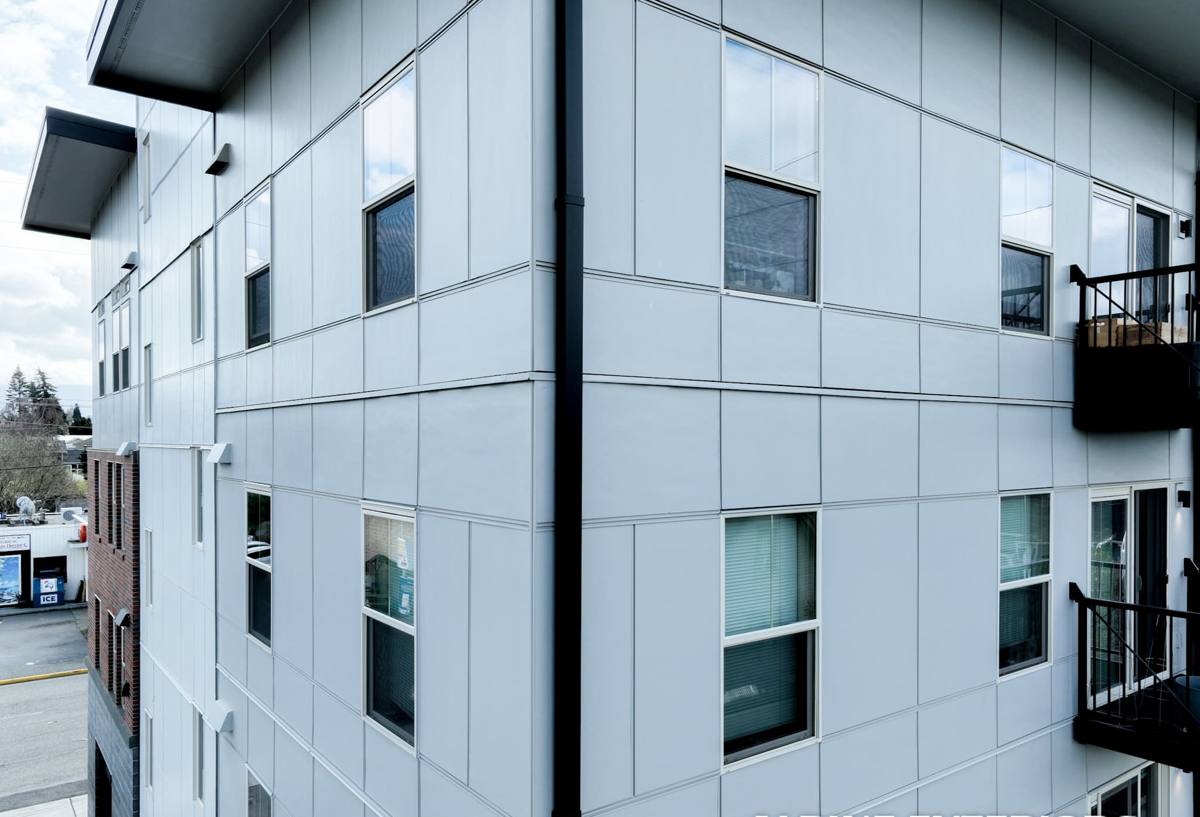
Why New Construction Window Installation Is Different From Replacement
New-construction windows are built with a nailing flange (also called a nail fin) around the perimeter of the frame. That flange gets integrated directly into the wall's weather-resistive barrier and flashing system during framing, before siding goes on. This is fundamentally different from a replacement window, which is typically an insert unit fitted into an existing opening with the old exterior trim left in place.
The upside of new construction is control. We're not working around old caulk, old trim, or a wall assembly someone else built decades ago. The downside is that there's zero room for shortcuts — because the window is now a structural part of the wall's water management, not something bolted on after the fact. Get the flashing sequence wrong at this stage and you're building a leak into the house that may not show up for years.
What This Means for a Columbia Build
Because Columbia's location puts homes within reach of salt-laden marine air and wind-driven rain off Bellingham Bay, the margin for error on flashing and sealant choice is smaller here than it would be in a drier, inland part of Whatcom County. We treat every new-construction window opening as a system: frame, flashing, barrier, and window, all working together.
Whatcom County Climate Factors That Shape the Right Window Choice
Three climate realities specific to this area drive our recommendations for new-construction windows in Columbia:
Salt Air
Homes closer to the water deal with airborne salt that accelerates corrosion on unprotected metal components — hinges, cranks, screws, and some cladding fasteners. This doesn't rule out any particular window type, but it does affect which hardware finishes and frame materials hold up best long-term.
Driving Rain
Wind-driven rain doesn't just fall straight down — it gets pushed sideways into wall assemblies, which is exactly the condition new-construction flashing details are designed to handle. A weak flashing lap or a missed sealant joint that would go unnoticed in a calm, dry climate becomes a real leak path here.
Moss and Prolonged Dampness
Whatcom County's long wet season keeps exterior surfaces damp for extended stretches, which is what allows moss and algae to establish on siding, trim, and sills. Window sills and the trim around them need to shed water cleanly and dry out between rain events, or they become a spot where moss gets a foothold and moisture lingers against the building.
Window Types and Frame Materials — What We Recommend and Why
There's no single "best" frame material for every new-construction project — it depends on budget, the home's design, and how close the site is to the water. Here's how the common options compare for a Columbia build:
| Frame Material | Moisture & Salt Air Performance | Maintenance | Typical Use Case |
|---|---|---|---|
| Vinyl | Good — won't corrode or rot; seams and welds matter | Low | Budget-conscious builds, rental or spec construction |
| Fiberglass | Very good — dimensionally stable, resists moisture and salt exposure well | Low | Homes closer to the water or with high sun/temperature swings |
| Wood-clad | Depends heavily on cladding integrity and installation quality | Higher — cladding seams need monitoring over time | Owners prioritizing a specific interior wood look |
| Aluminum | Prone to corrosion in salt air unless properly coated/anodized | Moderate | Limited use; we're cautious about this near the water |
Our default recommendation for Columbia builds leans toward vinyl or fiberglass for most homes, simply because they hold up with the least maintenance burden in a marine-influenced, high-moisture climate. Wood-clad units can work well, but we're upfront that they require more attention over the years — the cladding has to stay sealed at every joint, or the wood underneath starts absorbing moisture.
Flashing, Housewrap, and Weather Barrier Details That Actually Matter
This is the part of the job that doesn't show once the siding goes on — and it's the part that determines whether the window leaks in five years or in twenty-five. A correct new-construction window install follows a specific sequence:
- Sill pan flashing installed first, sloped to drain water outward, before the window ever goes in the opening
- Weather-resistive barrier (housewrap) integrated with the flashing using a proper shingle-lap sequence, so water is always directed down and out, never trapped behind a lap
- Window set into the opening, shimmed level and plumb, and fastened through the nail fin per the manufacturer's schedule
- Side and head flashing tape applied over the nail fin, lapped correctly with the housewrap above and beside it
- Sealant used only where it's specified to work with the flashing system — not as a substitute for it
Skipping or reordering any of these steps is the single most common cause of new-construction window leaks we see when we're brought in to diagnose problems on homes built by other crews. In a climate that pushes rain sideways into walls for months at a time, there's no substitute for doing this sequence correctly the first time.
Our New-Construction Window Installation Process
For a Columbia project, our process generally runs like this:
1. Plan Review and Window Schedule
We review the window schedule against the framing plan to confirm rough openings, egress requirements, and any structural headers are accounted for before framing locks those dimensions in.
2. Coordination With the Framing Crew
Window installation on new construction has to sync with the framer's schedule and the housewrap installer's schedule. We coordinate timing so flashing and barrier work happens in the right order, not after siding prep has already started.
3. Flashing and Barrier Installation
Sill pans, housewrap integration, and flashing tape go in following the sequence above, at every opening, without exceptions for openings that "probably" won't see much weather exposure.
4. Window Setting and Fastening
Units are set square, level, and plumb, shimmed properly to avoid frame distortion, and fastened per the manufacturer's specified pattern — under-fastening or over-driving screws both compromise long-term performance.
5. Final Sealant and Inspection
We walk every opening before siding closes it up, checking that flashing laps are correct and sealant is applied only where it belongs in the system.
Energy Performance and Code Considerations for Whatcom County
Washington's energy code sets minimum performance requirements for new-construction windows, generally expressed as U-factor and Solar Heat Gain Coefficient (SHGC) ratings. In Whatcom County's climate — mild but consistently damp and overcast — the priority is usually a low U-factor for heat retention rather than aggressive solar heat gain control, since intense summer sun isn't the dominant concern here the way it might be in a hotter climate.
We help builds meet or exceed the applicable energy code requirements, and we'll walk through what U-factor and SHGC numbers mean for a specific project rather than just quoting a spec sheet. Beyond code minimums, well-sealed new-construction windows also reduce condensation risk on interior glass and frames during Bellingham's cold, damp winter mornings — a comfort issue as much as an energy one.
What Correct Installation Looks Like: A Homeowner's Checklist
If you're overseeing a build in Columbia and want to know what to look for, or what to ask any contractor doing this work, use this list:
- Sill pan flashing is installed and sloped to drain, visible before the window goes in
- Housewrap is lapped over flashing correctly — water should always flow down and over, never into a seam
- Windows are shimmed, not forced, into the rough opening — no racking or bowing of the frame
- Fasteners follow the manufacturer's schedule, not "close enough" spacing
- Flashing tape fully seals the nail fin on all four sides before siding installation begins
- Sealant is used as specified by the manufacturer, not as a general-purpose fix for gaps
- Frame material and hardware finish match the site's exposure — more caution near the water
- Sills are detailed to shed water cleanly, reducing the moss and algae buildup common in this climate
Why Hire a Crew That Already Works in Columbia
A lot of window installation problems trace back to a crew applying a generic approach in a climate that doesn't tolerate generic work. We work throughout Bellingham and Whatcom County, and the flashing and material decisions we make on a Columbia build reflect what actually happens to homes here — the salt air, the driving rain, the months of dampness that let moss take hold on anything that doesn't shed water well. That's not something you get from a crew that installs the same way regardless of where the house sits.
We also don't treat new-construction window work as a side task tacked onto a siding job. It's coordinated with framing and weather barrier installation as its own critical step, because that's what the climate here requires.
If you're planning a new build or addition in Columbia and want new-construction windows installed correctly the first time, we're happy to walk the plans with you and provide a free, no-pressure estimate — just fill out the form below.